


“Real-World Asset Tokenization Surges, Bridging Traditional
November 13, 2025 | by Sophia Vance
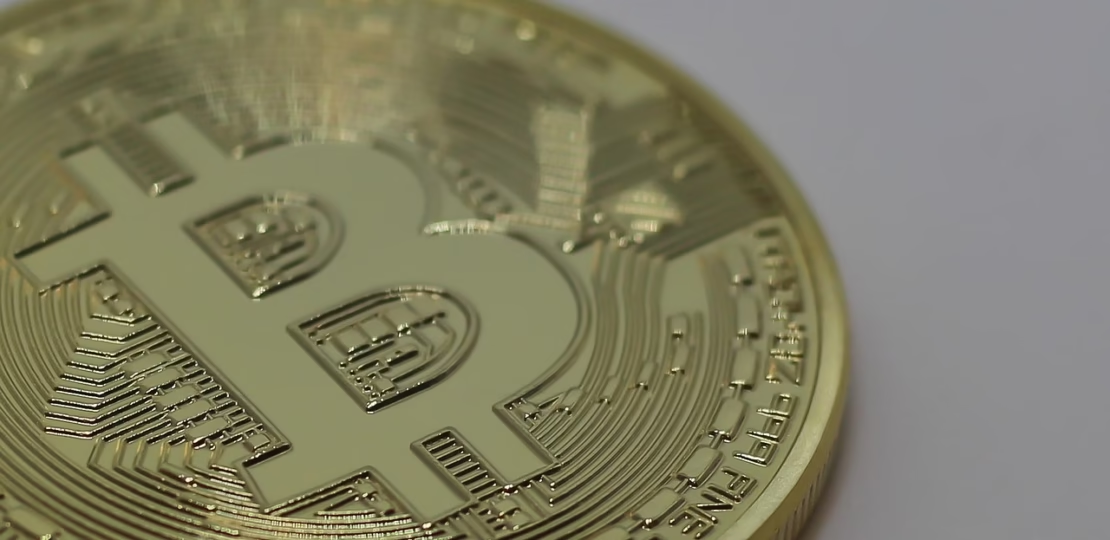
Real-World Asset Tokenization Surges, Bridging Traditional Finance and DeFi
In a landscape cluttered with buzzwords and fleeting trends, few phenomena have demonstrated the staying power and transformative potential quite like real-world asset (RWA) tokenization. The recent acceleration in RWA token issuance and integration within decentralized finance (DeFi) ecosystems signals not just a trend, but a paradigm shift that savvy investors and institutions can no longer afford to overlook.
The Fundamentals: What Is Real-World Asset Tokenization?
At its core, real-world asset tokenization transforms tangible assets — think real estate, commodities, debt instruments, and even art — into digital tokens on a blockchain. These tokens represent fractional ownership or rights tied directly to the underlying physical asset. Unlike pure cryptocurrencies, RWAs anchor their value in something concrete and traditionally understood by markets and regulators alike.
This isn’t just a theoretical exercise. Tokenization democratizes access to assets historically locked behind steep capital requirements, long settlement times, and opaque processes. Suddenly, an investor anywhere can hold a slice of a commercial property, a vintage car, or a bundle of corporate bonds — all tradable on a digital ledger with near-instant settlement and transparency.
Why Now? The Surge in Demand and Technology Alignment
The convergence of pressures from traditional finance and the rise of DeFi protocols has catalyzed this surge. Traditional finance players face mounting costs, inefficiencies, and demand for liquidity, while DeFi requires real-world collateral to grow beyond speculative assets and safeguard against volatility.
2024 has marked a pivotal inflection point. Regulatory clarity in several jurisdictions is gradually emerging, technology infrastructure for secure custody and compliance has matured, and institutional appetite for blockchain integration is peaking. Platforms like Centrifuge and Maple Finance are pushing the envelope, creating reliable marketplaces for tokenized assets that combine real yield with the programmability of smart contracts.
“Real-world asset tokenization unlocks a new dimension of capital efficiency by transforming illiquid treasures into tradable, programmable financial instruments.” — Sophia Vance
Bridging the Gap: Traditional Finance Meets DeFi
The most compelling narrative here is the deep integration blossoming between traditional financial frameworks and decentralized networks. DeFi’s protocols can now leverage tokenized real-world assets as collateral, fundamentally expanding what can be borrowed, lent, or traded within these ecosystems. The result is more stable and diverse asset pools backed by tangible value rather than purely speculative tokens.
Moreover, tokenization brings robust transparency. Every transaction and ownership change is recorded immutably on-chain, reducing settlement dispute risks, enabling automated compliance checks, and opening a well-needed window of insight often missing in conventional asset markets.
For institutional investors, this interoperability means crypto portfolios can finally diversify into real-world sectors seamlessly, reducing their systemic exposure and improving yield profiles. For retail investors, it spells empowerment—direct access to asset classes once reserved for the ultra-wealthy or institutional-grade players.
Challenges, But Not Roadblocks
This space is far from bulletproof. Regulatory frameworks are still evolving, differing by region and often trailing behind innovation. Custody and asset verification require airtight mechanisms to prevent fraud and misrepresentation. And scaling blockchain throughput to support high transaction volumes remains a technological hurdle.
But these hurdles are precisely why the field is attracting the best minds and capital. Solutions are emerging that combine on-chain audits, decentralized oracles for real-time asset verification, and hybrid custodial models protecting investor interests without sacrificing decentralization principles.
The Road Ahead: What Investors Should Watch
Looking forward, expect increased partnerships between legacy financial institutions and blockchain innovators. More product offerings will mix tokenized RWAs with algorithmic strategies to hedge risks and enhance returns. Regulatory bodies will continue clarifying frameworks, driving broader adoption and safer investment climates.
Most crucially, the tokenization wave will redefine liquidity itself. Assets once tethered by geography and archaic intermediaries become global, fractional, and instantly tradable — a seismic shift in how value flows through economies.
The intersection of traditional finance and DeFi powered by real-world assets is where the future of capital markets is being forged. Investors equipped with knowledge and foresight will find themselves well ahead of the curve, not just watching disruption unfold, but actively shaping it.
The era of asset tokenization is no longer hypothetical — it is happening, and it is here to stay.

RELATED POSTS
View all


“NFTs and the Future of Finance: Decoding the Buzz Around No
May 3, 2025 | by Sophia Vance
“AI Integration in Crypto: The Future of Smart Trading”
October 17, 2025 | by Sophia Vance

Bitcoin Hits New All-Time High Above $120K as U.S. Inflation
July 16, 2025 | by Sophia Vance