


“Major Banks Explore Issuing Stablecoin Pegged to G7 Currenc
October 16, 2025 | by Sophia Vance
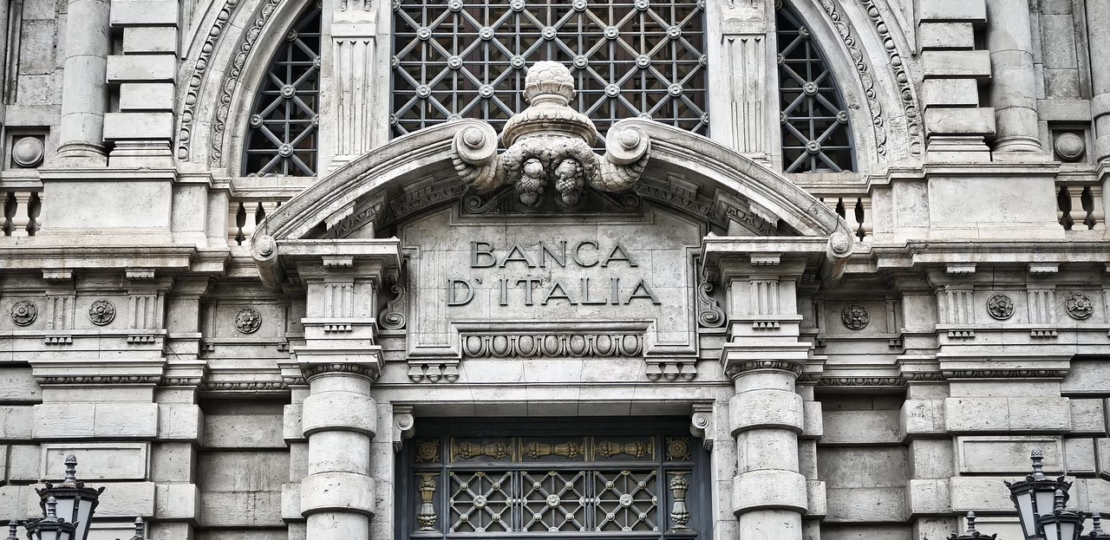
Major Banks Explore Issuing Stablecoin Pegged to G7 Currencies
In the high-stakes arena where traditional finance meets cutting-edge innovation, the latest move by some of the world’s largest banks signals a transformational shift. The exploration of stablecoins pegged directly to G7 currencies — the benchmark group of the United States, Japan, Germany, the United Kingdom, France, Italy, and Canada — is not just another fintech experiment. This initiative holds the potential to redefine liquidity, trust, and global financial interoperability.
The Rationale: Stability in the Storm
Stablecoins have rapidly evolved over the past few years from niche crypto experiments to mainstream financial instruments. Yet, one persistent challenge remains: volatility and regulatory uncertainty. Banks entering the stablecoin space with the backing of G7 currencies address both concerns decisively.
By pegging digital assets to the economic pillars of the global financial system, these institutions provide an unparalleled level of stability. No longer will investors or transactional users need to weather dramatic swings common with other cryptocurrencies. Instead, they gain the confidence of widely recognized fiat currencies, which anchor the value of these new digital units.
Consider this — imagine a stablecoin that maintains a 1:1 parity not just with the US Dollar but also with the Euro, Pound Sterling, Yen, and others, all guaranteed by trusted financial institutions. The implications for cross-border payments, remittances, and even everyday retail transactions are enormous.
Strategic Motivations Behind the Move
What’s driving major banks toward this innovation now? Several strategic factors fuel their interest:
- Mitigating Risks: Traditional banks are acutely aware of how disruptive cryptocurrencies can be if left unchecked. By issuing their own stablecoins, they retain control over monetary flows and embed robust compliance frameworks from the outset.
- Competing with Big Tech and DeFi: Stablecoins issued by tech giants and decentralized finance projects have already captured significant market share. Financial institutions must respond with offerings that uphold regulatory trust but offer similar efficiencies.
- Reinventing Payment Systems: Legacy payment rails are slow, expensive, and often opaque. Stablecoins pegged to G7 currencies can accelerate settlement times to mere seconds, reduce costs, and enhance transparency.
- Preparing for a Digital Currency Future: Central banks worldwide are experimenting with digital currencies. Banks issuing stablecoins can influence standards, shape interoperability, and position themselves as crucial conduits in a digitized economy.
Potential Impact on Global Finance
What does this mean beyond the institutional boardrooms? The ripple effects could prove seismic:
“A G7 pegged stablecoin could become the new lingua franca for global commerce, drastically cutting frictions and costs inherent in currency conversions.”
This would be a game-changer for entities ranging from multinational corporations managing foreign exchange risk to consumers sending small remittances across borders. The promise is simple — borderless, near-instant digital money movement with the trust of major global currencies behind it.
Moreover, such stablecoins could enhance financial inclusion in emerging markets where access to stable, reliable currencies remains a challenge. By providing digital access to strong fiat proxies, major banks may open new doors for entrepreneurs, freelancers, and everyday users previously marginalized from global trade.
Regulatory and Technical Hurdles Remain
As promising as this frontier is, it’s far from risk-free. The regulatory environment for stablecoins is rapidly evolving, but still uncertain. Governments and central banks focus intently on ensuring these instruments do not threaten monetary sovereignty, consumer protection, or financial stability.
Technically, banks must navigate ensuring robust cybersecurity, maintaining scalable blockchain infrastructure, and integrating legacy systems with digital asset ecosystems. These are not trivial endeavors. The battle lines for compliance, privacy, and technology standards will be fiercely contested.
Looking Ahead with Foresight
For investors and market watchers, this development demands closer scrutiny. The convergence of traditional finance and digital innovation is progressing aggressively. The banks willing to lead on G7 stablecoins can solidify dominance in the next generation of finance or risk relegation to a secondary role.
In this relentless tide of innovation, the winners will be those who balance trusted stability with nimble digital execution. G7-backed stablecoins could be the first step toward a new paradigm where money moves global, free from friction but firmly anchored to the pillars of economic trust.

RELATED POSTS
View all

Senate’s GENIUS Act Passage Fuels Stablecoin Boom and 24/7 U
July 2, 2025 | by Sophia Vance

“Tokenization of Real-World Assets: Bridging Traditional Fin
May 31, 2025 | by Sophia Vance

“Memecoin Mania: PEPE and Dogecoin Ignite Retail Frenzy Amid
November 8, 2025 | by Sophia Vance